

The Skynet Robotic Telescope Network

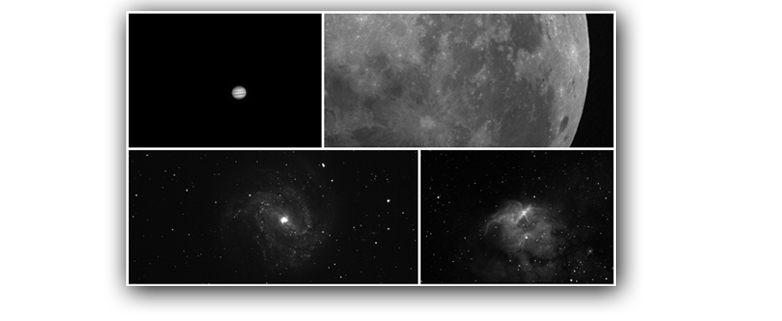
Whether you're a first-time astronomer or a professional, our easy-to-use yet powerful interface allows you to get the images you need.

We Do Astronomy Right

  • 10

    Telescopes Online

  • 22,108,811

    Images Taken

Introducing Skynet Global Observatory — Preview the Next-Generation Platform at skynetgo.org

We're excited to give the Skynet community an early look at Skynet Global Observatory, the next-generation platform that will eventually replace this site.

You can explore the preview now at skynetgo.org.

Please note: this is a demo environment at this stage. It is reset regularly, so anything you create there is temporary and will not be preserved. We've opened it up so that existing users and telescope owners can get hands-on with the new capabilities and share feedback that will help shape the platform before it goes live.

Skynet Global Observatory is a UNC-led platform that federates fully automated optical and radio telescopes into a single global observatory for research, education, and operational observing — supporting everything from near-Earth asteroids and supernovae to gamma-ray bursts and gravitational-wave counterpart follow-up. The new Skynet 2 platform is built for rapid, coordinated, multi-wavelength time-domain astronomy, with capabilities spanning imaging, spectroscopy, polarimetry, radio observing, alert-broker integration, and satellite tracking and downlink support.

Over 100 optical and a dozen radio telescopes — 102 optical and 11 radio instruments across six continents and ten countries — have already committed to the new platform. These will be integrated over time as we roll out the production deployment.

Telescope Efficiencies Changed

We have changed some telescope efficiencies recently to reflect the actual data extracted from images. Normally, the efficiencies are updated automatically, and these updates are smooth and do not significantly change the values once they are well established. However, we haven't yet accumulated enough data points to let this process run automatically for several telescopes for which the initial guess for the efficiency was clearly off. For these telescopes, we had to do this one-time update.

As a result, all new observations submitted to these telescopes will cost you more than before -- sometimes, significantly more, except for PROMPT-USASK. Moreover, if you have a long-running observation on multiple telescopes and/or choose exposure length for the Generic 16-inch w/back-illuminated CCD instead of choosing it for a specific telescope, exposure lengths will be scaled according to the new efficiency when dispatching the exposure, so they might be different than before for the same telescope. If you have such long-running observations, we suggest you to cancel and resubmit them to make sure that all exposure lengths are as you expect.

We apologize for any inconvenience this may have caused. Once again, this is a one-time change; future updates will not change these values significantly unless something serious happens, like replacing the camera.

Below is the list of affected telescopes; by definition, PROMPT5 = Generic 16" has the efficiency of 1.

TelescopeOld EfficiencyNew Efficiency
AURT0.120.44
DSO-140.220.38
DSO-170.130.59
PROMPT11.853.39
PROMPT20.270.32
PROMPT31.612.11
PROMPT70.661.44
PROMPT82.092.29
PROMPT-MO-10.821.12
PROMPT-USASK1.000.44
R-COP0.250.36
RRRT0.201.14
Yerkes-410.711.91


CTIO Telescopes Back Online

PROMPT telescopes at CTIO are back online after a 7-month shutdown.

PROMPT5 Discovery of DLT17u/AT 2017cbv Type Ia Supernova


Congratulations to L. Tartaglia (TTU, UC Davis), D. Sand, S. Wyatt (TTU), S. Valenti, K. A. Bostroem (UC Davis) for their discovery of the brightest type Ia supernova thus far this year.  It was initially detected on March 10, 2017 in NGC 5643 during PROMPT5's nightly surveying campaign and is now brighter than magnitude 12 making it an excellent target for both professional and amateur astronomers around the world.

Discovery report: http://www.astronomerstelegram.org/?read=10158

2016 STEM Career Showcase for Students with Disabilities

Tia Bertz and Chris Mathews are two incredible Skynet Junior Scholars who attended the 2016 STEM Career Showcase for Students with Disabilities yesterday at the North Carolina Museum of Natural Sciences.  We could not be more proud of them and their accomplishments.  You can watch their presentations below.


Successful Telescope Installation - PROMPT-AUGOII-1

Though a partnership with the Athabasca University and a generous donation from Dr. Ryan Boland of Savannah, Georgia,  Skynet deployed a 16-inch RCOS telescope in Alberta Canada.  Expect to see the new system come online within the next month.


Robert Martin Ayers Science Fund

The Robert Martin Ayers Science Fund is sponsoring at least 100 hours of observations with the PROMPT telescopes for researchers and students not at PROMPT Collaboration institutions.  Preference will be given to those at institutions without comparable facilities and resources.  For more information,  you can download the proposal form here: http://user.physics.unc.edu/~reichart/ayers.doc.